
Ghorepani Poon Hill Trek
Four nights, a 3,210 m sunrise, and the stone steps to Ulleri
- Land only
- Teahouse
- All meals on
From, per person
$580
$115/day
Annapurna Region · Nepal
The short version
The Annapurna region spreads north and west of Pokhara across the 7,629 sq km Annapurna Conservation Area, managed by the ACAP trust rather than the national park service. Its appeal is range. Ghorepani and Poon Hill at 3,210 m is a four to five day walk through rhododendron forest that peaks in colour from late March to mid-April. Mardi Himal reaches a 4,500 m ridge in five days with far fewer people. Annapurna Base Camp sits at 4,130 m in a glacial amphitheatre ringed by ten peaks above 6,500 m and takes ten to twelve days round trip from Pokhara. The full circuit crosses Thorong La at 5,416 m, though the jeep road up the Marsyangdi and down to Muktinath has cut walking days at both ends; most operators now bus past the tarmac and start at Chame or Manang. Tilicho Lake at 4,919 m is the standard side trip.
Twelve months, rated honestly. We would rather lose a booking than sell you a month that does not work.
Four nights, a 3,210 m sunrise, and the stone steps to Ulleri
From, per person
$580
$115/day

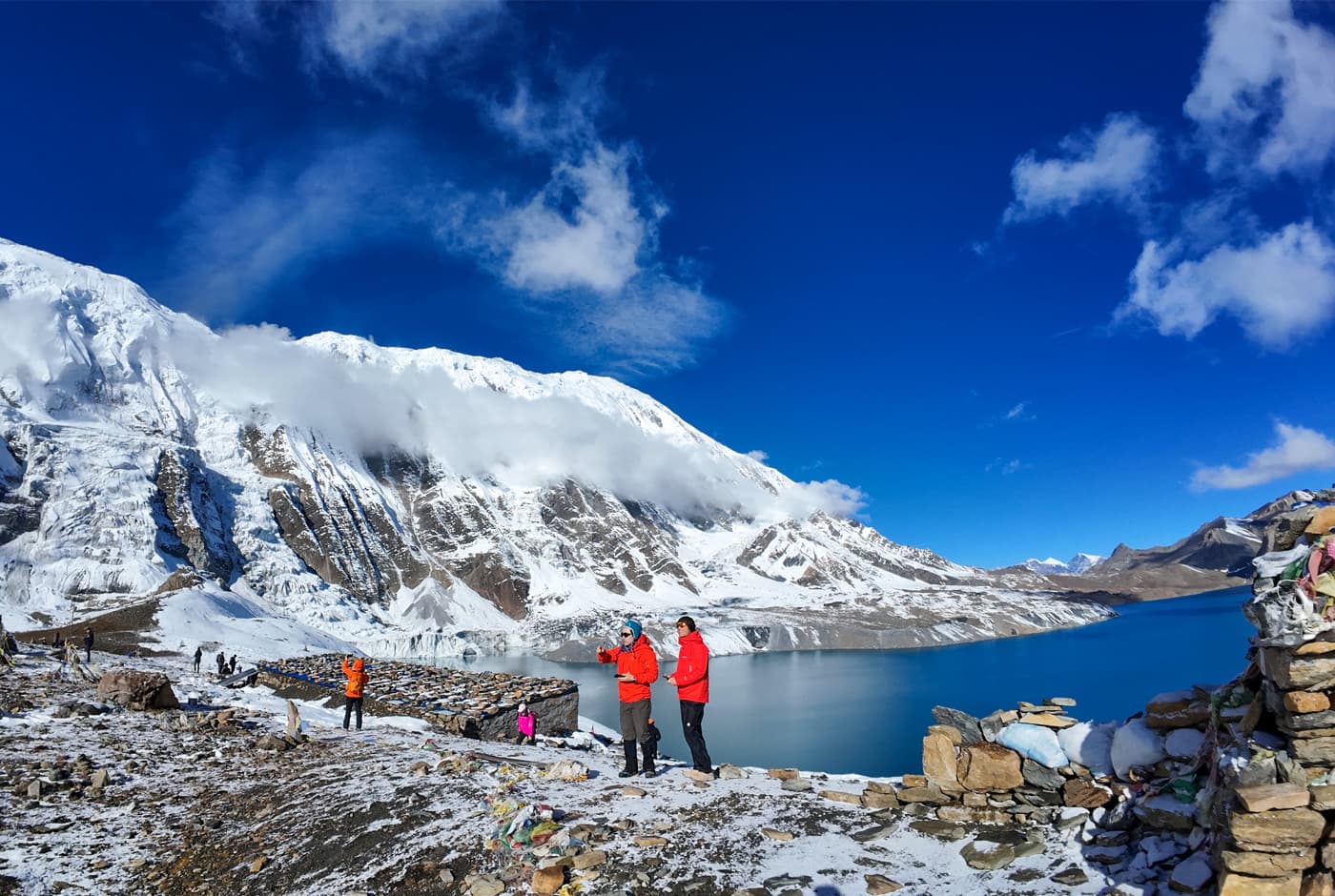
Tilicho Lake
From, per person
$7000
$60/day
Ridge walking above the cloud to a 4,500 m viewpoint below Machhapuchhre
From, per person
$720
$105/day
Into the Annapurna Sanctuary at 4,130 m, finishing at the Jhinu hot springs
From, per person
$1,050$1,240
$95/day
Besisahar to Jomsom over a 5,416 m pass, with Muktinath on the far side
From, per person
$1,380$1,620
$90/day
Poon Hill or Mardi Himal. Ghorepani–Poon Hill runs four to five days, tops out at 3,210 m and needs no altitude experience. Mardi Himal takes five days and reaches around 4,500 m for a much emptier trail. Annapurna Base Camp needs ten to twelve days and does not compress safely below that.
It has shortened it, not ruined it. Jeep roads now reach Manang from the east and Muktinath from the west, so the classic 21-day walk is typically done in 14 to 16 days by driving the tarmac sections. The NATT alternative trails run parallel to the road on the older footpaths for most of the affected stretches.
An ACAP permit, the Annapurna Conservation Area Permit, at NPR 3,000, about USD 23, for foreign nationals and NPR 1,000 for SAARC passports, plus a TIMS card at NPR 2,000, about USD 15. Both are issued in Kathmandu or Pokhara and checked at Birethanti, Dhampus and Chame. Buying them at a checkpost doubles the ACAP fee.
Nights at ABC in November run around minus 5 to minus 10 degrees Celsius, and lodge rooms above Deurali are unheated — only the dining hall has a stove. A minus 10 rated sleeping bag is the sensible baseline even in spring. Daytime walking temperatures at those altitudes are usually pleasant in the sun.
No. ABC tops out at 4,130 m against 5,545 m at Kala Patthar, so altitude risk is markedly lower and the trip is three to four days shorter. What ABC has instead is stairs — several thousand stone steps between Chhomrong and Bamboo that punish the descent more than the climb.
Quick answers
Send us the days you have and what you care about. You will get a real itinerary with the exclusions spelled out, not a brochure.
Plan my Annapurna Region trip